Thursday, May 30, 2019

A Letter for Peace


Caitlin Thurrell  --  22 May 2019

I am a woman who lives now in a desert village made abundant by thousands of years of human hands' joined effort.  The work of peace is not an easy work -- heavy weight of water and soil, harvest, children bourne.  Heavier work to ask life, bowing, from one's own place, than to take it by force from somewhere else.

A village is a particular and living being, made of the lives that fill it, and their weaving. Made of the weaving of a people into a land, and the labors that offer the space to thrive.  From the vantage of this village it is easier to imagine the life of another village: where women also carry water, where men also climb into trees to cut wood.  Where children also pull down green apricots to gnaw their hard, sour bodies and then toss them to stray dogs.  A Syrian village, that has been destroyed.  An Iranian village that could cease to exist.

I am a white-skinned woman born in the occupied indigenous territory now called the United States of America.  I live now in this place of great, dry mountains mostly for love of its water and the many works that make its life.  I live here, also, because the fruits of the American imperial project are bitter to me.  I would free my life from them to the extent that I can, though I do not imagine myself for a moment to be uncomplicit.

It is late spring.  The fields are green now with young barley.  Columbines bloom in the rocks, and dry, wild roses.  Sometimes when I blink, in the dark moment of closed eyes I see bombs falling, here.  I see the places where houses stand above their fields becoming wreckage, see the walls and canals carefully repaired each year for fifty generations become rubble.  I see the grandmothers I love -- whose knees hurt, who miss their grandchildren in the city, who tend beautiful gardens -- looking up at the sound of plane flight to be made blind by explosions of fire.  These are not empty imaginings.  This has happened how many times?  On beautiful spring mornings in Vietnam, Guatemala, Afghanistan, Iraq, Syria, Yemen.  It could happen now, soon, in Iran.

In how many lands have American bombs visited catastrophe on powerless people?  In how many lands have villages been destroyed?  I know one village, in my body, with the intimacy of a lover.  I can imagine what its destruction would actually mean, in a way I believe the perpetrators of such destruction cannot.  I trust this much, at least, in their humanity.

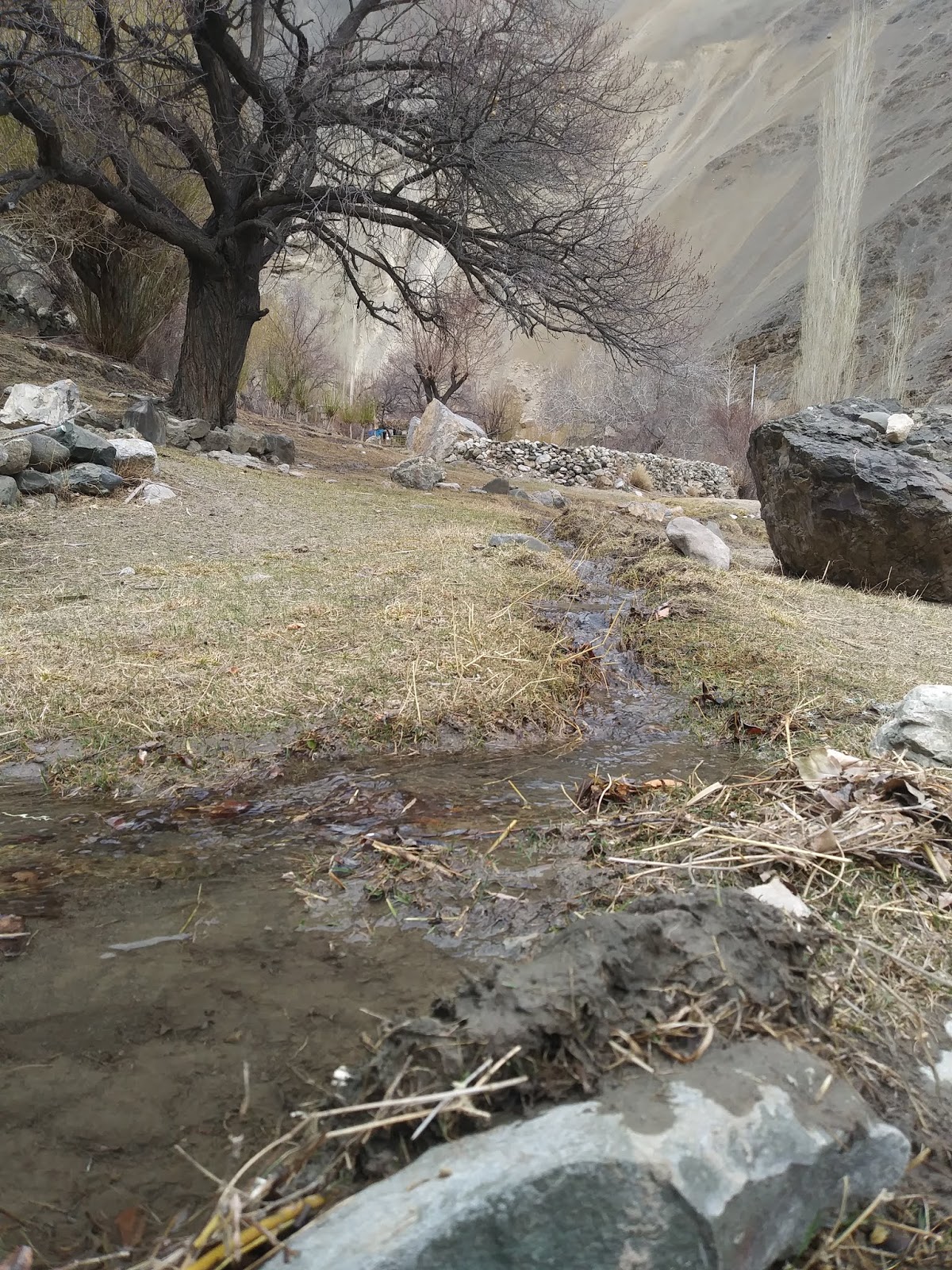
Today I am peeling willow poles in the forest of the upper village, the shout of the glacial stream so complete that it becomes a silence.  Because it is late spring; because this is the necessary work of these days, between the first and second waterings of the fields.  Because this is the truest way that I know how to pray against the terror of bombs falling -- on this forest, or any forest -- on these precious orchards and fields, or on precious Iranian orchards and fields.

May it not come to pass.  May it not be, that Iranian mothers and grandmothers look up to planes carrying death pregnant in their bellies.  May those who hold power speak out.  May we who hold power speak out against this unthinkable horror.  May the villages and cities, the lands and waters and precious bodies of that land, and every land, live undestroyed.


Friday, May 10, 2019

Giving Water, Manure, and Shau


We want to write more about manure.  It's so important to life.  For now, here is a shot of the early morning work getting going on an April plowing day.  The fields are flooded before manure is spread, so that it doesn't wash away -- so most plowing mornings start at first light with the whole village gathering to shovel into baskets and carry and dump, manure spread by Abis with shovels and turned in with the seed.

Please see a post last year from Caitlin on watering (with new photos), the work that is happening right now in Tar....


Here is a field being watered, before plowing

Here are the ladies who give the water

Making shau

And this is what we're going for.

Song and Turned Earth

Plowing Ama Tinles's fields

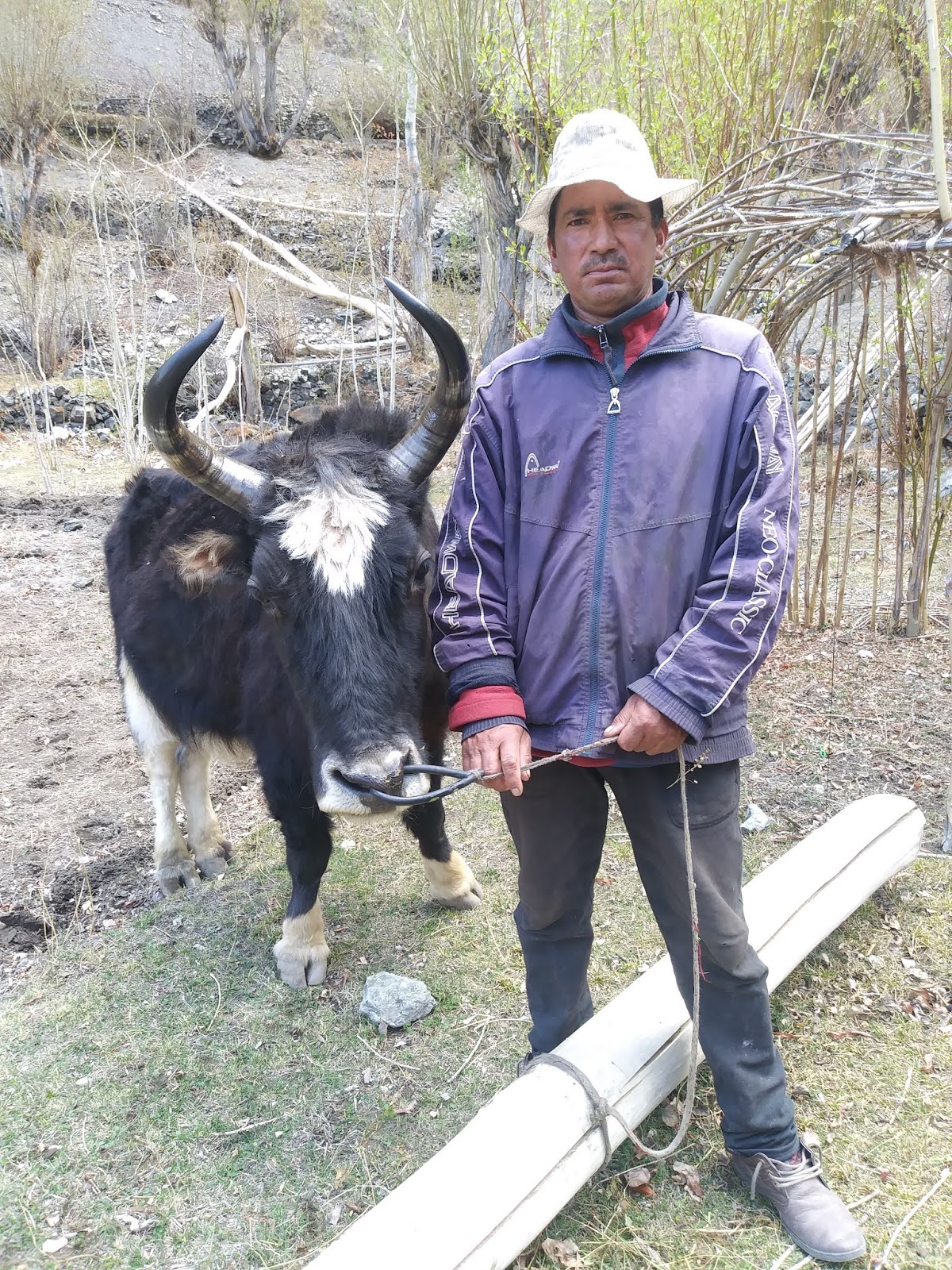
For the last twenty days I have been seizing hold of the plow by its wooden handle, stepping up all my weight upon the metal plowshare at the field edge as the dzo team pulls it forward.  The share bites maybe two hand's breadth deep into winter-packed earth, and I work its tall wooden shol, now bent over, now holding upright, all just to catch the next eight or twelve inches of unbroken earth and see it lift deep brown and break open like a wave.

Abi Tsewang, Acho Konchok, and a team of dzo, all hooked up with the shol

This is called tong tangches (giving the plow), and whoever plays this role also sings praise to the dzo.  The other tool of motivation is held in the offhand, a freshly cut smoothly green-barked willow switch.  Some guys who plow (it's men only) use the switch and barely sing.  Others give delightful song and even can plow singing at a jog behind the team.  On big days it's good to have them at the helm.  I'm slower than that, and I'm told I have a light hand.  Plowing slowly and carefully means less breaking -- you get caught under a giant alfalfa root and break the tong chung, a small specially-carved piece of willow wood that connects the plowshare and the shol, a part of the system designed to be the weak link that breaks and is easily replaced. 

My view of Acho Stondus fixing a new tong chung

I find I can use voice and body language and I only rarely need the lash.  It's still often fear that's motivating them, though, and in my heart I would like that to be different.  any people have been feeding me delicious words of need and praise for me to feed in turn to the dzo as we plow, burying the seed and manure to bring forth the barley once again.

Norbu nyis ka
you two golden ones

Tse-bo-ring shik
a long life to you

Lha kar tonpo la ging cha men a dzubi
On high white passes, won't you dzo stand proudly?

Ri stod tonpo la serchen mentok hamza salkan skyod ley
Respectfully journey to the mountaintop as grazers of the great golden flower

Drong la nyima laney boot dug lay....Gyat chu rolbo nam kyong chen lay
In the high wilds the sun falls easily....when will we bring another eighty rows?

Ama Balangi bu-stakh sengey nyis ka
Mother Cow's two sons like lions

For more, please see last year's post on plowing


Plowing with Aba Tsering Dorje and Jason

Memes Tundup, Stanzin, & Angchuk pushing rbat in front of the gonpa they built

Ama Gunzes (front with thokse) and Ama Yangzes at work

Acho Tsewang & his dzo


Plowing Kotipa's fields

Sunday, April 14, 2019

Seeking a Shepherd

 Himayalan Ibex -- Skyin -- Capra sibirica

We are searching for someone who loves walking in mountains to carry the shepherd work through this summer in Tar village in Ladakh. This is something that people in the village consistently identify as a need, and specifically they approve of the idea of a friend or acquaintance of ours coming to fulfill this role for a time.

If you or someone you know would seriously consider it, living with folks here, eating wholesome food from this land, bringing bundles of wild fodder back all summer for winter storage, please be in touch with us. The best time to come would be before June so we can overlap with you, and we would need you to stay for at least two or three months.

village sheep in the yok ma (lower village)

Lots to learn, an amazing place to explore.  Homestays are available for less than the price of a hostel, with skillful and willing teachers in the crafts of the village.  If you come before June, we can get you started on language.  Plenty of flexibility to this job, but a serious commitment is needed, spending most days taking the herd from the village and tending them in the mountains and high pastures where they graze.  The village is at around 11,000 ft (3230 meters) elevation.

The slopes are steep and the footing is challenging.  The days are not terribly long, but it will take time for anyone's body to transition to this altitude.  Expect camping conditions and amenities -- the village is not on any road.  Living here is inexpensive compared to the US, and if expenses for the flight, passport, and visa are a limiting factor we can certainly find the needed funds among our networks.  India is newly offering a one-year e-visa which makes that process much faster and easier.

We're delighted at the idea of introducing someone new to our friends, these amazing people in the village. If you have a serious interest please comment here or find me as "Jason M Chandler" on facebook.

Please see the last two blog posts (Ice Melting and Returning) and the rest of the blog for more context and the reasons we make this ask.

Abi Yangchan Lhadzom, spinning sheep's wool

Saturday, April 13, 2019

Friday, April 12, 2019

Ice melting

This past month was an ice-melting moon.  So much of the snow we saw everywhere is now dry rock as the first sliver of this spring moon waxes, and the stream has opened up a great deal, swelling with water.  This is the second clear evening we see this bright crescent, shining.

Manure work is almost done: another full day in the hot sun today, carrying baskets with people who know how to deal with their shit.

As I write, the last bare tip of the crescent slides behind a mountain that towers dark and purple to the southwest, where the ibex who were grazing near our work site today climbed high above us and disappeared into impossible cliffs.

The first stars are coming out between dark gnarled bud-rich branches of apricot.

~~~


There is a generation aging out in this village and they are still doing the majority of the everyday work to keep the animals well, the fields fertile, and the food flowing.  They have seen fifty, sixty, or seventy years.  They climb trees and save seed and plow fields and cut wood and carry water.  They know a great deal about how to live and how to work and enjoy life and do things simply and well.  And before mandatory education -- most of it in large institutions where children are beaten as punishment for unruliness -- teens were learning in their minds and bodies the ways to bring life to the village with their grandparents, in the fields, with the trees, around the hearth, and up in the valleys and shepherds' stone huts in the mountains.  There were great herds of sheep and goats up there each summer, herds that brought a renewing, abundant fertility to the old stone-terraced fields of barley, wheat, and peas in the village.  Now more and more of the village's elders are abandoning fields, lacking the labor and the animal manure to bring them through properly.

So, here's our position.  We know that the labor of just the two of us does a great deal to make these folks' lives and work more possible and more joyful.  And we know that the cultural interchange here with student groups and other guests has been rich and fruitful -- we've helped to facilitate this.  And in this time of returning to the village we feel our lives intertwined all the more with these people and this place.  We feel certain that we will return again, and we feel without a doubt that people want that, and want us to contribute to the life of Tar.  We know that we can contribute all the more if we bring friends with us when we return.


Should we now pursue a course of action in which Caitlin and I put significant energy into helping to bring visitors here to Tar?  The best kind would be those who will stay for months, do labor, learn language, potentially return in years to come, and thus not just take pictures of a place, not just go gather an experience for themselves, but actually help provide for the nourishment and revitalization of this place, and collectively do so in a long-lasting way.

With more labor and more people, more animals and more manure is possible -- healthy for the fields.  The Tarpa could afford once again to grow their herds of sheep and goats, bringing fiber and fertility.  With more homestay money flowing in, the village's young people would feel less pressure to leave the village to earn money, and with the draw of a steady multi-cultural presence in the village in the summertime, they would see more advantage in staying.  All our friends among the young people of Tar regret being away from the village so much -- this would give them another reason to stay.

What do you think?  Please respond in the comments below, and help us spread the word especially to young people that this type of opportunity is possible.  The likely start date is spring of 2021.

Photo by Mira van Dongen